

It has been two months since I sent anything to your inbox.
This was not a content calendar slippage nor was I suffering from a writer’s block.
I was building something. And I made a deliberate decision that I could not write about the problem and build the answer to it simultaneously, without one of them suffering.
I chose the build.
*This is Part 5 of the Agentic Parables. If you are new here — welcome. The series explores the hidden threats and real opportunities of the agentic AI era, through story, metaphor, and hard-won observation.*
Before I tell you what I have been working on, I want to share something that happened to me.
I was hiring for a growth role not long ago.
Two candidates. Both strong on paper. Same tools, similar experience, confident language throughout. I ran a proper process — a practical hackathon-style case study based on the actual kind of work we do.
One candidate performed brilliantly in it.
I hired them.
And I got it wrong.
They could not deliver at the level they had presented. Eventually I had to let them go.
That experience stayed with me — not because I made a bad decision, but because the process gave me almost nothing useful to decide with.
CVs describe what people have done.
Interviews reveal how well they can describe what they have done.
Practical exercises test performance under artificial conditions — not consistent demonstrated capability over time.
And this problem is accelerating faster than most people are acknowledging.
AI can now produce a polished, keyword-optimised, role-specific CV in four minutes. Interview preparation is becoming algorithmic. Professional identity is becoming easier to manufacture and harder to verify.
In an earlier parable in this series — The Parable of the Two Swords — I wrote about the difference between a blade that has been polished and one that has been struck. You cannot tell the difference by looking. You only discover it when the moment of real pressure arrives.

That parable was closer to autobiography than I realised when I wrote it.
So I started asking a different question.
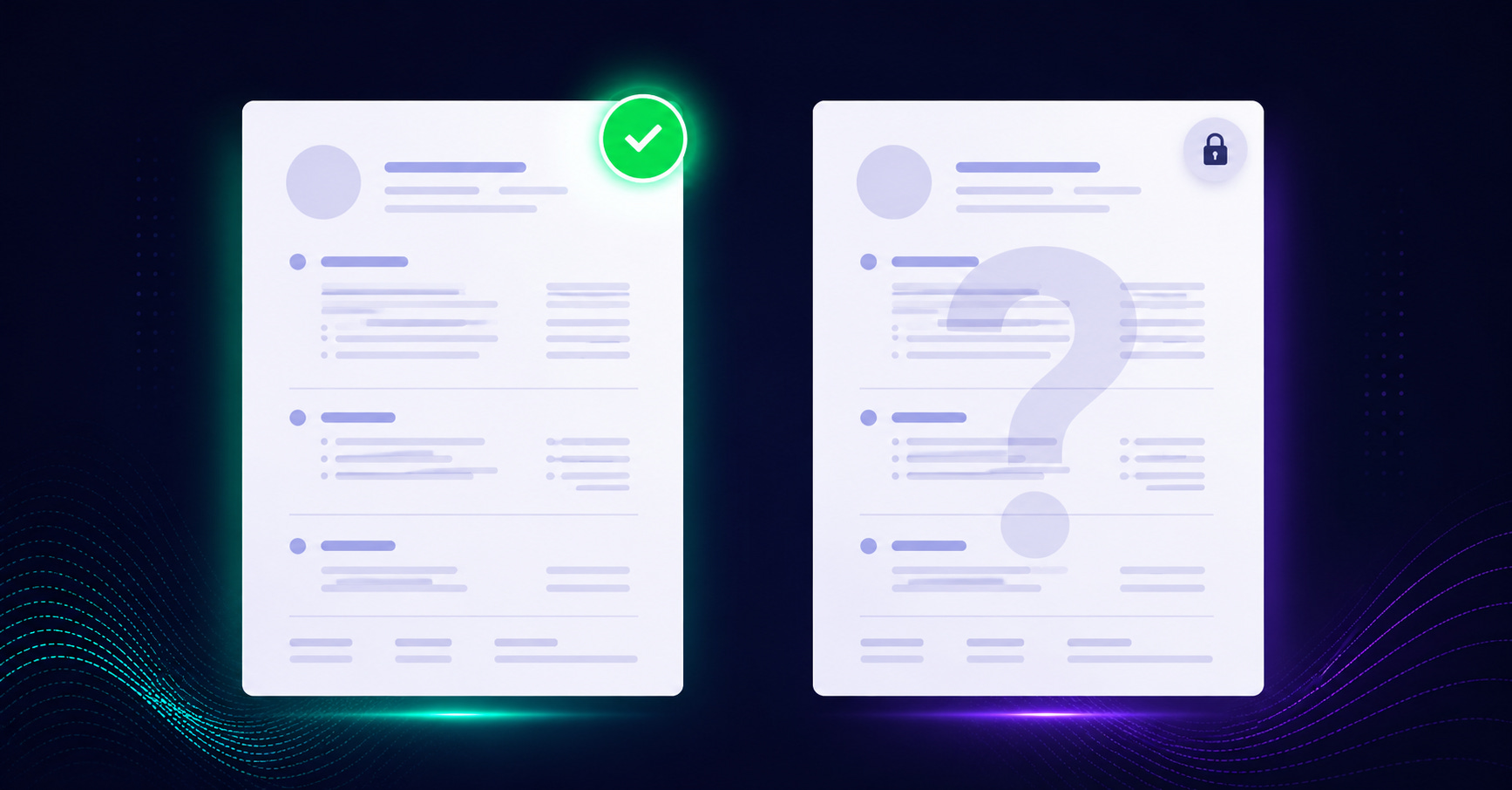
*What should a professional record look like when the claims within it have been independently confirmed?*
Not endorsed. Not certified. But confirmed.
Confirmed by peers who actually worked alongside you, by assessments that tested what you can consistently demonstrate, and by registries that validated your credentials against an independent source.
That question became the thing I have been building for the last year.
Over the next few weeks I am going to write more here — and on LinkedIn, about what that answer looks like. About why professional trust infrastructure is, I believe, one of the defining problems of the AI era. And about what it means to build a verified record rather than just a polished one.
This newsletter will be the first place you hear about it properly. Before the announcements. Before any press. Before the public launch.
If you have a colleague, a recruiter, or a professional navigating the AI era and trying to figure out how to prove their value in a market full of manufactured credentials — forward this to them. They will thank you when they see what is coming.
More soon.
Davies Bamigboye
*P.S. — Has this happened to you? Either side of the hiring table — as the person who hired wrong, or the person who was passed over despite being the real candidate? Reply and tell me. I read every response.*